Thursday, January 26, 2023

An Episcopal Bishop's Teaching on Abortion, Part 2 – Context

Introduction

On June 24, 2022, the U.S. Supreme Court overturned Roe vs. Wade and placed the question of abortion into the hands of each state. Americans, including church members, have mixed feelings and complex convictions regarding abortion, as reflected in various polls.[1] Most Americans want safe, legal abortion to be available. A majority is also uncomfortable with abortion in at least some circumstances. Of course, morality is not simply a matter of public opinion. The resolutions passed by the Episcopal Church’s General Convention[2] reflect the tension in these overlapping majorities.

That the issue and the questions surrounding it are complex is reflected in the Church’s history as it has grappled with the morality of abortion. The official teaching of the Church and that of its major saints and theologians have not been simple or straightforward.

Some Personal Context

I have come to see it as less than straightforward. I invite you to prayerfully think it through with me. I have long been persuaded by what is often referred to as the “consistent ethic of life,” which is committed to cherishing, defending, and nurturing the flourishing of all life (including to one degree or another, life in the womb). Such an approach opposes nearly all uses of violence and all “the evil powers of this world which corrupt and destroy the creatures of God” (BCP, p. 302). Many Christians whose life and teaching I respect have held this ethic, e.g., Dietrich Bonhoeffer, Dorothy Day, Fanny Lou Hamer, Helen Prejean (of ‘Dead Man Walking’ fame), Joan Chittister, Stanley Hauerwas, Rowan Williams, and others. That remains generally where my convictions lie.

In my 20’s, I was on the board of a pro-life organization, Matrix Lifeline, in Bloomington, IN (like those commended by General Convention Resolution D105 in 1994[3]). Ironically, the chair of the board of that organization was a woman who was also a leader in the local Democratic Party. And when I was invited to speak on the topic with a class at Indiana University, my counterpart defending the pro-choice position was a woman who was involved in the local Republican Party. Things were different then.

Recent Historical Context

This last point is significant. Things were different before the 1980’s. The abortion fault lines have not always run simply between conservatives and liberals/progressives, whether inside or outside the church. The Roman Catholic Church has long been Pro-Life and opposed to abortion (though, as we will see, even that is more complicated in the tradition). But that has not always been so for other Christians, including conservative Christians.

In 1968, before Roe v Wade, Christianity Today, the conservative Evangelical Christian magazine founded by Billy Graham, gathered 25 conservative evangelical theologians, doctors, and scientists to discuss the morality of abortion in a “Protestant Symposium on the Control of Human Reproduction.” The statement coming out of that symposium affirmed, “Whether or not the performance of an induced abortion is sinful we are not agreed, but about the necessity and permissibility for it under certain circumstances we are in accord.”[4] A special issue of Christianity Today followed including a lead essay by conservative Old Testament scholar, Bruce Waltke who asserted, “the absence of any biblical text forbidding abortion” and “the Old Testament does not equate the fetus with a living person.”[5]

In 1971, another conservative Christian magazine, Eternity, published an essay by Nancy Hardesty that came to a similar conclusion. Also in 1971, conservative Evangelical scholar and apologist, Norman Geisler, published a book with Zondervan (a conservative Christian book company) in which he contrasted the Roman Catholic position with what he understood to be the biblical view, asserting that “The embryo is not fully human.”[6]

There were certainly also conservative evangelicals who disagreed with these positions[7], but there was no anti-abortion consensus among those who otherwise shared basic conservative theological commitments And it was not considered a litmus test issue.

Nor was there a consensus among more liberal/progressive Christians. Some Protestant theologians influential among liberal/progressives who were not conservative evangelicals, like Karl Barth and Dietrich Bonhoeffer, argued for a more pro-life position. In ‘Ethics’, Bonhoeffer wrote,

Destruction of the embryo in the mother’s womb is a violation of the right to live which God has bestowed upon this nascent life. To raise the question whether we are here concerned already with a human being or not is merely to confuse the issue. The simple fact is that God certainly intended to create a human being and that this nascent human being has been deliberately deprived of his life. And this is nothing but murder.[8]

Many of the Roman Catholics and others who formed the first anti-abortion organizations in the late 1960s were liberal Democrats who also opposed the Vietnam War and nuclear proliferation.[9] Civil Rights icon, Fannie Lou Hammer, was also pro-life.[10]

The November 1980 issue of the progressive Christian magazine, Sojourners was dedicated to affirming a pro-life position from a more progressive position. There were several essays by women and men including one by Jesse Jackson[11]

Certainly, many liberal/progressive theologians advocated for a more pro-choice position[12]. But, again, there was not a clear consensus on the issue despite many shared convictions otherwise.

Well into the 1970’s, there were a significant number of pro-life Democrats and a similarly significant number of pro-choice Republicans. It has not always been a matter of conservatives on one side and liberals/progressives on the other. Beginning in the later 1970’s into the early ‘80’s, many liberals who had been pro-life became pro-choice and many conservatives who had been pro-choice became pro-life.

It is worth wondering what happened culturally and politically in those years and what has happened over the last generation or so that has made the divisions over abortion so much starker, more contentious, and a matter of partisan identity.[13] We might also wonder if a Christian understanding of abortion or any other moral issue should be expected to fit neatly into the contemporary categories of conservative or liberal or progressive.

An Episcopal Bishop’s Case for a Christian Understanding

The Episcopal Church has passed a number of resolutions over the last several decades on the subject of abortion at its General Convention. Together, those resolutions affirm the sanctity of life and strongly condemn abortion in some circumstances while defending access to safe, legal abortion as a necessary option for women. Thus, they reflect the conflicted, complex convictions many have and have had on the subject.

In this teaching series I will explore the issue of abortion, the life in the womb, and the agency of the woman bearing that life, offering what I believe is a faithful and reasonable understanding based on scripture, tradition, and creation (biology and science). That understanding recognizes that the holy mystery of becoming fully human is a gradual process in the womb and that the pregnant woman is not merely a passive vessel of that process of becoming. The moral balance at first tilts toward the agency of the pregnant woman (usually along with the father) and gradually tilts to include the baby developing in her womb.

I invite your feedback, comments and questions along the way. I also ask for your patience as we make our way toward a conclusion.


[1] Saad, Lydia,Where Do Americans Stand on Abortion?(https://news.gallup.com/poll/321143/americans-stand-abortion.aspx)

 Americans’ Opinions About Abortion, Jan. 2022, Marist Poll (chrome-extension://efaidnbmnnnibpcajpcglclefindmkaj/https://www.kofc.org/en/resources/communications/marist-polling-slide-deck2022.pdf)

 ‘Public Opinion on Abortion’, Pew Research Center, May 17, 2022(https://www.pewresearch.org/religion/fact-sheet/public-opinion-on-abortion/)

 Saad, Lydia, ‘“Pro-Choice” Identification Rises to Near Record High in U.S.’ (https://news.gallup.com/poll/393104/pro-choice-identification-rises-near-record-high.aspx)

[2] The Episcopal Church’s Stated Position on Childbirth and Abortion(https://anoddworkofgrace.blogspot.com/2023/01/the-episcopal-churchs-stated-position.html)

[4] ‘A Protestant Affirmation on the Control of Human Reproduction’, Christianity Today, November 8, 1968, (https://www.christianitytoday.com/ct/1968/november-8/protestant-affirmation-on-control-of-human-reproduction.html)

[5] Waltke, Bruce K., ‘The Old Testament and Birth Control: Family Planning Under the Law’, Christianity Today, November 8, 1968, (https://www.christianitytoday.com/ct/1968/november-8/old-testament-and-birth-control.html)

[6] Geisler, Norman, Ethics: Alternatives and Issues, Zondervan Publishing House, Grand-Rapids, Michigan, 1971

[7] For example, Cottrell, Jack W., ‘Abortion and the Mosaic Law’, Christianity Today, March 16, 1973, (https://www.christianitytoday.com/ct/1973/march-16/abortion-and-mosaic-law.html)

[8] Bonhoeffer, Dietrich, Ethics, Fortress Press, p. 206

[9] Williams, Daniel K., ‘The Partisan Trajectory of the American Pro-Life Movement: How a Liberal Catholic Campaign Became a Conservative Evangelical Cause’, Religions, 2015, 6, 451–475

(https://www.mdpi.com/2077-1444/6/2/451 pdf)

[11] Sojourners Magazine, November 1980, (https://sojo.net/magazine/november-1980).

[13] See Williams, Daniel K., ‘The Partisan Trajectory of the American Pro-Life Movement: How a Liberal Catholic Campaign Became a Conservative Evangelical Cause’, Religions, 2015, 6, 451–475(https://www.mdpi.com/2077-1444/6/2/451) See also: Roach, David, ‘How Southern Baptists became pro-life’, Baptist Press, January 16, 2015 (https://www.baptistpress.com/resource-library/news/how-southern-baptists-became-pro-life)


Part 1: The Episcopal Church’s Stated Position on Childbirth and Abortion

Part 3: Scripture – Old Testament 


Wednesday, January 11, 2023

The Episcopal Church’s Stated Position on Childbirth and Abortion

At the 149th Convention of the Diocese of Fond du Lac held on Oct. 29, 2022,, a resolution was proposed regarding the church’s teaching on abortion (see the first comment below).

To address this resolution, I will be posting a series of teachings on the subject over the next several weeks beginning with listing below the resolutions passed by the General Convention of the Episcopal Church over the last several decades.

There is perhaps no moral issue more contentious, more polarizing, more emotionally charged, and, more complicated than abortion. It is a daunting topic to engage. Women and men with varying opinions have deeply held convictions and emotions on the issue. Many feel conflicted and ambivalent. This complexity is reflected in the resolutions passed over the years by the General Convention of the Episcopal Church.

In 1967, the General Convention of the Episcopal Church passed a “Statement on Abortion.” That statement has been reaffirmed with some revision in several subsequent General Conventions, reaching its latest and fullest expression in 1994. Additional resolutions related to childbirth and abortion have been adopted at General Conventions. Taken together, these resolutions affirm the sanctity of life while also defending safe and legal abortion as a necessary option for women.

These resolutions constitute the closest thing the Episcopal Church has to an official teaching. The Episcopal Church has no pope or magisterium by which teaching or dogma are promulgated such as to be binding on the conscience of every member. Historically, the Episcopal Church, and the Anglican Tradition more generally, have allowed for more freedom of conscience than some other Christian traditions. That is part of the beauty of our tradition.

That does not mean that members of the Episcopal Church are free to believe whatever they want or to simply rely on their own wisdom or prejudices. The Book of Common Prayer and our Constitution and Canons do contain teaching on doctrine and morals. Beyond that, we are committed to testing our thinking and behavior against the teaching of scripture guided by tradition using faithfully formed and informed reason as best we can. I think we can add as another guide to our discernment what the great Anglican theologian, Richard Hooker, called the “works of nature” and those before him called the “Book of Nature.” In other words, we also seek understanding by contemplating and studying creation.

Together we seek to have our imaginations and our lives shaped by those sources of our faith. We all affirm the faith as defined in the Book of Common Prayer. Beyond that, as Christians have always done, we will disagree on some things. We will seek to persuade one another in charity and encourage one another to deeper faithfulness. And we will continue to gather to worship the One who weaves us together and together weaves us into the eternal life and love and joy of the Holy Trinity.

While the following resolutions are not binding and members may disagree with all or parts, they do represent what we have affirmed as a body gathered in General Convention. Therefore, they are to be taken seriously and it is good for Episcopalians to be familiar with them. To that end, I encourage you to read them carefully.


General Convention Resolutions       

Resolution 1994-A054: Reaffirm General Convention Statement on Childbirth and Abortion

Resolved, That this 71st General Convention of the Episcopal Church reaffirms resolution C047 from the 69th General Convention, which states:

All human life is sacred from its inception until death. The Church takes seriously its obligation to help form the consciences of its members concerning this sacredness. Human life, therefore, should be initiated only advisedly and in full accord with this understanding of the power to conceive and give birth which is bestowed by God. It is the responsibility of our congregations to assist their members in becoming informed concerning the spiritual and physiological aspects of sex and sexuality.

The Book of Common Prayer affirms that "the birth of a child is a joyous and solemn occasion in the life of a family. It is also an occasion for rejoicing in the Christian community" (p. 440). As Christians we also affirm responsible family planning.

We regard all abortion as having a tragic dimension, calling for the concern and compassion of all the Christian community.

While we acknowledge that in this country it is the legal right of every woman to have a medically safe abortion, as Christians we believe strongly that if this right is exercised, it should be used only in extreme situations. We emphatically oppose abortion as a means of birth control, family planning, sex selection, or any reason of mere convenience.

In those cases where an abortion is being considered, members of this Church are urged to seek the dictates of their conscience in prayer, to seek the advice and counsel of members of the Christian community and where appropriate, the sacramental life of this Church.

Whenever members of this Church are consulted with regard to a problem pregnancy, they are to explore, with grave seriousness, with the person or persons seeking advice and counsel, as alternatives to abortion, other positive courses of action, including, but not limited to, the following possibilities: the parents raising the child; another family member raising the child; making the child available for adoption.

It is the responsibility of members of this Church, especially the clergy, to become aware of local agencies and resources which will assist those faced with problem pregnancies.

We believe that legislation concerning abortions will not address the root of the problem. We therefore express our deep conviction that any proposed legislation on the part of national or state governments regarding abortions must take special care to see that the individual conscience is respected, and that the responsibility of individuals to reach informed decisions in this matter is acknowledged and honored as the position of this Church; and be it further

Resolved, That this 71st General Convention of the Episcopal Church express its unequivocal opposition to any legislative, executive or judicial action on the part of local, state or national governments that abridges the right of a woman to reach an informed decision about the termination of pregnancy or that would limit the access of a woman to safe means of acting on her decision.


Resolution 1982-A065: Condemn Use of Abortion for Gender Selection and Non-serious Abnormalities

Resolved, That the 67th General Convention of the Episcopal Church strongly condemns the act of abortion when the sole purpose of such action is the selection of the sex of the child; and be it further

Resolved, That this new ability to diagnose serious abnormalities in the fetus before birth is a welcome gift to reduce pain and sorrow in the parents and suffering in the newborn, but that abortion after the diagnosis of non-serious or trivial abnormalities, or abortion in a case where purely cosmetic abnormalities are discovered, is also strongly condemned.


Resolution 1988-D124: Condemn Acts of Violence Against Abortion Facilities and Their Clients

Resolved, That this 69th General Convention of the Episcopal Church condemn all actions of violence against abortion clinics; and be it further

Resolved, That this Convention deplore any acts of violence against those persons seeking the services available at such clinics.


Resolution 1988-A089: Promote Use of Materials on Human Sexuality and Abortion for All Age

Resolved, That this 69th General Convention call on the Presiding Bishop and the Executive Council to provide and promote the use of materials on human sexuality, birth control and family planning for all age groups as part of this Church's on-going Christian Education curricula as reflective of God's creation; and be it further

Resolved, That the topic of abortion be included in the Church's education curricula and that these materials be explicit, with a full understanding of the physical, emotional and spiritual realities and risks involved in abortion; and be it further

Resolved, That we encourage the members of this Church to give strong support to responsible local public and private school programs of education in human sexuality.


Resolution 1991-C037: Oppose Legislation Requiring Parental Consent for Termination of Pregnancy

Resolved, That, in the matter of requiring parental notification or consent when minor women seek safe means of acting on their decisions to seek termination of pregnancy, this 70th General Convention go on record as opposing efforts to legislate requiring such notification or consent, unless such notification or consent laws allow non-judicial bypass, in the event of the inability to notify parents or where family dysfunction may put such minors at serious physical, psychological or emotional risk, whereby such minors can make an informed decision with the notification or consent of some other responsible adult with experience and/or expertise, such as a clergy person, teacher, guidance counselor, mental health professional or other family member.


Resolution 1991-A096: Continue Discussion on the Use of Fetal Tissue for Research Use

Resolved, That the 70th General Convention rejects conception for the purpose of providing fetal tissues for therapeutic or medical research usages; and be it further

Resolved, That this 70th General Convention rejects the use of fetal tissues aborted for financial profit for use in therapy and medical research, and be it further

Resolved, That the discussion concerning the use for therapeutic or medical research purposes of tissues from healthy fetuses, aborted to save the life of the mother, be continued during the next triennium.


Resolution 1994-D105: Commend the Work of Pregnancy Care Centers

Resolved, That the 71st General Convention commend the members of this church who minister through pregnancy care centers, thereby helping to accomplish the will of General Convention to "assist those faced with problem pregnancy" (1988 General Convention Resolution on Abortion); and be it further

Resolved, That this General Convention commends the work and mission of pregnancy care centers which stress unconditional love and acceptance, for women and their unborn children; and be it further

Resolved, That we encourage the work of local pregnancy care centers to develop an outreach of love to pregnant women and to mothers and their children.


Resolution: 1994-D091: Practice of Forced Abortions and Sterilization in China

Resolved, That the 71st General Convention of the Episcopal Church deplore the practice of forced abortions and forced sterilization in the families of the People's Republic of China; and be it further

Resolved, That the Episcopal Church of the United States urge the U.S. government to consider all requests for political asylum by pregnant Chinese citizens and their families in the U. S. subject to forced abortion laws upon return to China; and be it further

Resolved, That this 71st General Convention request the Secretary to communicate immediately the intention of this resolution to Vice President Gore who will head the U.S. delegation to the U.N. sponsored International Conference on Population and Development to be held in Cairo beginning September 5, 1994, and to the U.S. Secretary of State, and to Anglican Bishop Ding of the China Christian Council.


Resolution 1997-D065: Express Grave Concern Over Misuse of Partial Birth Abortion

Resolved, That this 72nd General Convention of the Episcopal Church express grave concern about the use in the third trimester of pregnancy of the procedure known as intact dilation and extraction (commonly called "partial birth abortion") except in extreme situations; and be it further

Resolved, That the 72nd General Convention of the Episcopal Church continue to encourage its Dioceses and Congregations to give necessary aid and support to all pregnant women.


Resolution 2000-D104: Affirm Adoption and Support Legislation on Adoption Counseling

Resolved, That the 73rd General Convention of the Episcopal Church affirm the value of adoption and recognize it is in the best interest of the child to be adopted by a stable person or family to nurture him or her; and be it further

Resolved, That the General Convention of the Episcopal Church urge the U.S. Congress to pass legislation making adoption counseling available to those facing an unplanned pregnancy and to those seeking to adopt.


Resolution 2018-D032: Advocate for Gender Equity, Including Reproductive Rights, in Healthcare

Resolved, That the 79th General Convention of The Episcopal Church acknowledge the need for universal and equitable access to good quality health care that allows for equal utilization for those with equal need; and be it further

Resolved, That this Convention acknowledge that equitable access to women’s health care, including women’s reproductive health care, is an integral part of a woman’s struggle to assert her dignity and worth as a human being; and be it further

Resolved, That The Episcopal Church call for women’s reproductive health and reproductive health procedures to be treated as all other medical procedures, and not singled out or omitted by or because of gender; and be it further

Resolved, That The Episcopal Church support health care that takes into account the specific health care needs of all persons, including women; and be it further

Resolved, That this Convention direct the Office of Government Relations and the Episcopal Public Policy Network to urge all Episcopalians to advocate for government to address the specific needs of health care for everyone, especially women's and girls’ health care, by:

·       Supporting legislation that creates equal utilization of health care for those in equal need, regardless of ability to pay, and reject reasons for unequal use as well as strategies that promote unequal access to health care;

·       Advocating for everyone to have the right to make decisions about their bodies and those decisions should be between themselves and their provider (reaffirming 1994 A054: That The… “Episcopal Church express its unequivocal opposition to any legislative, executive or judicial action on the part of local, state or national governments that abridges the right of a woman to reach an informed decision … or that would limit the access of a woman to safe means of acting on her decision.);

·       Ensuring equal access to every health care service regardless of gender (reaffirming 1994 A055: that the… “General Convention urge adequate government funding and support for research and development, prevention and treatment in matters affecting the health and quality of life of women, including domestic violence, AIDS, heart disease, breast, ovarian and endometrial cancer, safe and effective contraceptives, and other methods of pregnancy prevention, maternity care, menopause and chronic illnesses unique to or prevalent among women);

·       Ensuring health care is equal in coverage and cost regardless of gender.


Resolution 2022-D083: Addressing the erosion of reproductive rights and autonomy

Resolved, that the 80th General Convention recognizes that pregnancy and childbirth are dangerous undertakings that risk permanent disability and death for those who bear children; and be it further

Resolved, that the Episcopal Church reaffirms that parenthood “should be initiated only advisedly and in full accord with this understanding of the power to conceive and give birth which is bestowed by God” (1988-C047); and be it further;

Resolved, that the Episcopal Church recognizes that access to abortion is a key element in preserving the health, independence, and autonomy of those who can bear children; and be it further;

Resolved, that the 80th General Convention affirms that all Episcopalians should be able to access abortion services and birth control with no restriction on movement, autonomy, type, or timing; and be it further

Resolved, that the 80th General Convention understands that the protection of religious liberty extends to all Episcopalians who may need or desire to access, to utilize, to aid others in the procurement of, or to offer abortion services.


Part 2: Context

Part 3: Old Testament

Part 4: New Testament

Part 5: Tradition

Part 6: Tradition, continued

Part 7: Back to the Bible

Part 8:  Wisdom and the Glorious Works of Nature

Part 9: Rights, Choice, Obligations, and Community

Part 10: Conclusion

Sunday, October 23, 2022

Of Mercy and Banana Peels – Luke 18:9-14


I suspect that Jesus would have liked slapstick comedy. You know, the Laurel and Hardy sort of humor. Remember? Laurel will be eating a banana and throw the peel on the ground. And you know, as soon as you see Hardy walking up the road what’s going to happen. It’s the pratfall, the trip, the rug pulled out from under your feet, the banana peel in the way.

Jesus seems to have had a liking for that sort of thing, continually pulling the rug out from under our feet or tossing banana peels in our path. His parables are often like banana peels tossed on the pathway of our moral self-satisfaction.

This morning’s parable, in particular, is such a banana peel. It’s a familiar story – the Pharisee and the Tax Collector praying at the temple. In fact, it’s so familiar it has lost some of its edge for us. We already know who is the good guy and who the bad guy.

Jesus’ original hearers would not have been so sure. The Pharisees were not known as necessarily self-righteous or righteous in any other way than the way we all hope to be righteous. The Pharisees were part of movement of lay people who had a passion for seeking after God’s heart, for living according to the Torah – for living faithfully so that all Israel might be redeemed. If anything, Jesus had much in common with the Pharisees

Tax Collectors, on the other hand, everyone knew and no one liked. Even under the best of circumstances few people are excited when they see the tax man coming. But in a time when you are occupied and oppressed by a foreign nation, tax collectors are even worse. Not only are they taking some of your money to run the government, but the government they are taking money to run is a foreign occupier. Tax collectors would have been seen as the collaborators with the enemy, with the oppressor. The last thing you would want your son to grow up to be would be a tax collector.

And so in this parable we have the Pharisee and the Tax Collector. The Pharisee prays to God, recounting all the good things that he has done – good things that everybody would have recognized as good things. He fasts. He tithes. He is a regular worshipper. All the things that we hope to be ourselves.

Of course, as he is praying and recounting all the good things, he has one eye open to those around him. The Pharisee prays with peripheral vision, looking to either side at those who might not quite measure up to his standards: all the rogues, the prostitutes, thieves, adulterers, and, maybe even especially, this tax collector (we all know what sorts of people they are). The Pharisee is confident that he is on the right track, that he is dotting all the i’s and crossing all the t’s. Not like so many other people.

The Tax Collector, on the other hand, as everyone would have known, is all undotted i's and uncrossed t's. And he knows it. He prays the only honest prayer he can pray, “God have mercy on me, a sinner.”

The Pharisee is a moral, upright person. He is on the straight and narrow. But it is on that straight and narrow that Jesus tosses his banana peel, and the Pharisee who has every reason to think that he is right with God slips on the peel and falls. Meanwhile, the Tax Collector who has every reason to think that he is out of sorts with God goes home justified.

And I suspect those who heard Jesus tell this parable slipped on the banana peel as well. What kind of a morally uplifting story is that? Not the kind of story you want to tell your children. They might take it seriously. The just person is condemned and the contemptible person is justified? Jesus doesn’t even suggest that the Tax Collector went home to live differently. He only throws himself on God’s mercy.

The point is not that being a tax collecting collaborator is a matter of indifference to Jesus. The point is that the Pharisee is in as much need of God’s mercy as is the Tax Collector. As are we all. And, of course, we all get that now. Don’t we? Don’t we?

There is a third person implied in this parable. This person is praying as well, and watching both the Pharisee and the tax collector. We are the third person. If we’re not careful, there is a banana peel in our path as well. How often do we see this parable and say, “Thank you, God, that I am not self-righteous, like that Pharisee"?

We all slip on the banana peel sooner or later. We measure ourselves against others. Whether it is the righteous and the unrighteous, the holy or the unholy, the mature or the immature, the sophisticated or the unsophisticated, the just and the unjust. We all fall into the trap of keeping score. Thank God I am not like that liberal. Thank God I am not like that conservative. Thank God I am not like that fundamentalist. One way or another, we are usually pretty sure that we are the ones who get it. We are the ones who are superior. We are the ones who are on the side of the angels.

Again and again Jesus tosses a banana peel on our path to moral superiority, our own exalted opinion of ourselves. We are reminded that we don’t know as much as we think we do. We are reminded that we are not as good as we like to think we are. We are reminded that our perspective is not God’s. We are reminded that we often slip into our own version of the Pharisee in this parable. We slip and land on our moral backsides.

By God's grace we are humbled and reminded, yet again, that our only honest prayer is, “God, have mercy on me a sinner.” In fact, the only prayer that is anything other than stammering, and the only deed that is anything other than stumbling, is the one that begins and ends with, “Have mercy on me, a sinner.”

Have heard the story of the man who dies and goes to the Pearly Gates where he is met by St. Peter?

Peter says, “Before you get in, you have to pass this little test. You have to make sure you have scored enough points to get in. You have to get one hundred points.”

The man thinks that should not be too hard because he has, after all, led a very good life. So he says to St. Peter, “Well, first of all, I was married for 57 years to one woman and was faithful from the very beginning until the very end.

Peter says, “That’s impressive. Three points.”

Then the man says, “Well, I also was a regular at church, Sunday in and Sunday out."

Peter gives him another point.

The man tries again, “I tithed. I gave 10% of everything I earned to the church and to the poor

Peter says, “Well, good for you. That’s another three points.”

“Did you know that I also volunteered for the youth group for five years? Do you know how many lock-ins that is!?”

“Four points.”

“I was politically active and always voted for the right candidate”

“Another point.”

The points are not adding up very fast. The man begins to despair. He says, “Well, how about this?” “What about that?” But his score remains distressingly low.

Finally, the man beats his breast in despair and cries out, “At this rate the only way that I’ll get into Heaven is by the mercy of God!”

Peter smiles and says “One hundred points!”

The first word for Christians is grace The last word for Christians is grace; and every day, along the way, is grace, grace, grace.

That’s not good news for the Pharisee in us who wants to keep score. It is very good news for the Tax Collector in us who can only pray,

“God have mercy on me, a sinner.”

Watch out for those banana peels.

Monday, August 15, 2022

Lambeth Conference Conversations, Part 3 (sometimes it was about sex & sexuality)


The motto for the 15th Lambeth conference was “God’s Church for God’s World.” As I mentioned in the last post, the bishops gathered talked about many things concerning both the church and the world at this moment in history. One of those topics was Human Dignity, something that seems to be undermined or denied on many fronts, directly and indirectly, deliberately and “accidentally” as the side-effect of developing technologies. It was the document on this topic, made public just a week before we arrived at Canterbury for the Conference, that generated considerable controversy. In that initial document was inserted an affirmation of a resolution passed at the Lambeth Conference in 1998 asserting that the bishops gathered at that Conference “cannot advise the legitimising or blessing of same sex unions nor ordaining those involved in same gender unions.”  It remains unclear how that got included in the document or by whom. In any event, there was immediate pushback from several of the provinces in the Anglican Communion – Scotland, Wales, the Episcopal Church, Brazil. The document was reworked to state,

Prejudice on the basis of gender or sexuality threatens human dignity. Given Anglican polity, and especially the autonomy of Provinces, there is disagreement and a plurality of views on the relationship between human dignity and human sexuality. Yet, we experience the safeguarding of dignity in deepening dialogue. It is the mind of the Anglican Communion as a whole that “all baptised, believing and faithful persons, regardless of sexual orientation are full members of the Body of Christ” and to be welcomed, cared for, and treated with respect (I.10, 1998). Many Provinces continue to affirm that same gender marriage is not permissible. Lambeth Resolution I.10 (1998) states that the “legitimizing or blessing of same sex unions” cannot be advised. Other Provinces have blessed and welcomed same sex union/marriage after careful theological reflection and a process of reception. As Bishops we remain committed to listening and walking together to the maximum possible degree, despite our deep disagreement on these issues.

This, of course, did not make everyone happy, but it did describe the current reality of the Anglican Communion. And this seems a particularly significant statement, “Given Anglican polity, and especially the autonomy of Provinces, there is disagreement and a plurality of views on the relationship between human dignity and human sexuality.”

The Human Dignity document had much that was good and important that was good in it. But all the attention went to this one paragraph. Which was pretty much the opposite of how the rest of the Lambeth Conference went. Though the disagreement about human sexuality was in the air, most conversations, formal and informal were about other concerns. But, I did have some conversations in which the topic came up opr in which I brought it up. Here are some gleanings from those conversations:

·       On the bus from Heathrow to Canterbury, a bishop from an African province expressed impatience with those provinces who chose not to come (Nigeria, Uganda, Rwanda) and indicated that he does not approve of their approach. To the Communion. He did not say anything about his own views regarding human sexuality but criticized the idea of boycotting and neglecting the fellowship of the Lambeth conference.

·       I had a long conversation with a South Sudanese bishop who I know well about the disagreements regarding sexuality in which it was clear that our disagreements on this are profound and deep. I pointed out that he considered me to be faithful, but I had come to a different conclusion. Among other things, I also observed that the church in South Sudan ordains women and has a woman bishop. Other provinces do not, and many, with whom he otherwise agreed, think that that is unbiblical as they interpret the scriptures. So, it is possible for faithful people to read the Bible seriously and come to different conclusions. He did not accept the analogy and asserted that you cannot compare the two. It was also clear that this was connected in his mind with polygamy which is still common in South Sudan. Still, he noted his affection for a gay bishop he knows in spite of his conviction that that bishop is “living in sin.”

·       I had a similar conversation with another South Sudanese bishop who was equally clear that he did not see much room for disagreeing on how to faithfully understand same-sex marriage. I again explained how my own thinking had changed. We did not exactly “agree to disagree” but we remained on friendly terms.

·       A Sudanese bishop observed that the people on the ground in the villages of his province cannot wrap their heads around the idle of same-sex relationships. It is culturally foreign. He also noted that his church exists in a tenuous position under an oppressive government shaped by a radical version of Islam. The threat of violence and perhaps being declared an illegal organization are not idle concerns for them. He and other Sudanese bishops (and other bishops from particular provinces) were concerned about the ramifications and potential backlash their people would face back home depending how things went at the Conference.

·       An American bishop observed that part of our dilemma is that we hear from the bishops of some provinces that being associated too closely with those provinces that celebrate same-sex marriage and allow for those who are so married to be ordained puts their people and churches at real risk. But GLBT+ people in America and elsewhere also feel threatened. The concerns of both are real.

·       Most Sudanese and South Sudanese bishops and perhaps some others did not receive communion with the rest of us as a matter of conscience which was painful. But they remained otherwise engaged. This was disappointing and frustrating. In one conversation a Kenyan bishop said that this was no way to treat the holy Sacrament. A South Sudanese bishop replied that his archbishop had told him to. It is also clear that there is a range of views of Holy Communion ranging from a more catholic, “high” understanding, to a more Protestant, “low” understanding (just another of the important things about which we disagree in the Anglican Communion).

·       At our formal session on Human Dignity, the Archbishop of Canterbury read his letter to the bishops of the Anglican Communion (Here). He elaborated on that letter in what I believe to brilliant and significant remarks (found here). The letter and his remarks charted a course for a Communion marked by unity and plurality, a Communion of provinces which are autonomous, yet interdependent. He affirmed that there is a plurality of understanding of human sexuality faithfully arrived at. Toward the end of his remarks, he made this significant statement, “I am very conscious that the Archbishop of Canterbury is to be a focus of unity and is an Instrument of Communion. That is a priority. Truth and unity must be held together, but Church history also says that this sometimes takes a very long time to reach a point where different teaching is rejected or received. I neither have, nor do I seek, the authority to discipline or exclude a church of the Anglican Communion. I will not do so.”

·       When we formally discussed the issue in our small group conversations, a South Sudanese bishop said, “God forbid that hate would come from my heart, but I hold with the tradition.” He also observed that the majority of the Anglican Communion holds a traditional view on human sexuality. Then he paused and noted reflectively, “But, Elijah was in the minority. . .” He trailed off, leaving that a thought to be pondered.

In that same small group conversation, I explained briefly how I had come to change my mind on the topic. 

One of the South Sudanese bishops wondered, “At what point do we decide a disagreement is too deep and too basic to maintain communion?”

·       A Tanzanian bishop, as we talked over a meal, said that he and others need to do their homework, looking at the biblical and biological arguments regarding human sexuality before judging the conclusions to which others have arrived. He noted that some Tanzanian bishops opted not to come to the Lambeth Conference, but he believes most bishops of that province are where he is.

·       A bishop from the Indian subcontinent said that he believed that in 10 years the disagreement about sexuality will be like that of the ordination of women.

·       After the session in which the Archbishop of Canterbury read his letter and we discussed sexuality in our small groups, a bishop from the Province of Western Africa told me that this Lambeth Conference was the defeat of those (like the leaders of ACNA and GAFCON) who have wanted the Communion to be divided because of the disagreements regarding human sexuality. It had become clear that however broad or deep the disagreement is, the majority of bishops in the Anglican Communion were committed to remaining in communion (even if to varying degrees). He said that he thought those who were choosing to set themselves apart from the majority of the Communion should change their name to something other than Anglican. He also noted that he knew there were bishops from the provinces that boycotted this Lambeth Conference – Nigeria, Uganda, Rwanda – would have liked to come but were forbidden to do so by their archbishops.

I knew in my head that there was considerable diversity in Africa and the rest of what is commonly called the Global South. But the conversations I had brought that diversity home. No one person or entity speaks the “Global South” or even for all those who by conviction do not think Same-sex relationships can be blessed. The Anglican Communion is much more complex than that. It also became more clear to me than I might have thought before that it would be a mistake to underestimate the strength of the bonds of affection that exist in the Anglican Communion and our connection to the See of Canterbury.

Previous:

Lambeth Conference Conversations, Part 1 (it was not all about sex)

Lambeth Conference Conversations, Part 2 (it was not all about sex)


Thursday, August 11, 2022

Lambeth Conference Conversations, Part 2 (it was not all about sex)

Archbishop Justin Welby's 3rd Plenary Address

“The heart of the church is deeply relational”

– Justin Welby, Archbishop of Canterbury

You might think from some of the reporting that the Lambeth Conference which ended last Sunday was preoccupied with disagreements and debates about human sexuality. That is actually far from the case. Aside from a lot of worship, we formally engaged things like Evangelism & Mission, Discipleship, Climate Change, Interfaith Relations, and better addressing the scandal of abuse when it happens in the church and committing to preventing it. Informally, the conversations were mostly about these and other issues. Here are more gleanings from conversations I had while at the Lambeth Conference:

·       There was an announcement at our first gathering letting us know that the water from all the taps at the university where we were staying had drinkable water. It was a reminder that many in the world cannot take clean water for granted, even from the faucets in their homes when they have them. It also reminded me of the scandal it is that it is not true for everyone in America, not least in places like Flint, Michigan.

·       A bishop of Bangladesh said there are fewer legal restraints on the church than in some other places, but his church has had to be careful not to make too many converts. Converts’ families (Muslim or Hindu) often abandon them, leaving them needing support from the church which is committed to doing so but is already strained financially and otherwise.

The wife of this bishop is a native of India who splits her time between India and Bangladesh. She has worked for an aid organization. She spoke of the frustration when she is in Bangladesh of having her clothing choices challenged in public. 

They also spoke of the devastating effects climate change is having on their country, e.g., more and worse storms, flooding, etc. 

This was a recurring theme in conversations with bishops from around the world. Those of island nations spoke of rising sea levels that lead to shrinking islands. Others spoke of less reliable rainfall and drought. Many spoke of increasing number of storms of increasing severity. Others, of an increase of damaging wildfires. This is one of the issues we discussed formally and about which we issued a call to action.

·       When, in our Bible study, we looked at the relationship of suffering and rejoicing, our South Sudanese bishops spoke of dancing and singing in refugee camps with tears of grief while still rejoicing in their faith in God and hope for the future.

·       We heard of the church in Jerusalem and the Middle East which runs schools and hospitals for anyone regardless of their religion.

·       We heard from a bishop of the Church of England who was born in Iran. Her father was an Iranian who had converted from Islam and married and English woman. He became the Anglican Bishop of Iran for nearly 30 years. She has warm memories of her Muslim grandfather, “a godly man”. After the Islamic Revolution there were threats and an assassination attempt against her father. Then, her brother was assassinated, and the family went into exile in England. In Iran, today, the church is not officially acknowledged to exist and Christians are considered apostates. There is currently no bishop of Iran. But the church does exist and Christians living under threat are none the less able to exercise hospitality and generosity.

·       Interfaith relations was one of the topics we formally discussed. While acknowledging the hard realities that some live with in countries where a particular version of radical Islam prevails, we heard stories of cooperation between Christians and Muslims in Kenya and elsewhere. The Archbishop of Alexandria, “My neighbor’s faith and mine do not simply coexist, they interact and corelate.” And in India, the various faith’s cooperated in addressing Covid-19.

·       We heard the story of a mechanic who contacted his local Church of England parish church to enquire about being baptized. A man who needed some work on his car had spoken to him about Jesus and faith and he wanted to be baptized. It turns out, unbeknown to the mechanic, that it had been the bishop who needed some car work. Evangelism and Mission were other topics we discussed formally.

A bishop of South Sudan and I discussed the challenges of forming disciples in our relative contexts. I spoke of complacency, the plethora of distractions, and a wariness of commitment. He spoke of the lack of Bibles and the reality that concerns about food and fuel for cooking were uppermost in peoples’ minds.

·       We heard from a bishop of New Zealand about the growth of congregations of young people based on discipleship in small groups of shared life, worship, and mission. Discipleship was another topic we formally discussed.

·       In several conversations with bishops from South Sudan to Australia, it was clear how closely the rest of the world pays attention to American politics. Several expressed concern.

·       In a conversation with a bishop of England, we both noted the negative phenomenon of shrinking and aging populations in many of our small towns and villages as more and more people move to urban centers. We compared the negative effects of this on our communities. He observed that in many English villages the parish church is the last remaining institution.

·       The wife of a Scottish bishop spoke of her work as a visiting nurse to expectant and new mothers for the National Health Service. The NHS of Scotland guarantees at least one prenatal visit and at least 11 visits in the first five years after the child’s birth. This is a proactive, prolife policy it seems to me.

Previous: Lambeth Conversations, Part 1 (it was not all about sex) 

Next: Lambeth Conversations, Part 3 (some of it was about sex)

Wednesday, August 10, 2022

Lambeth Conversations, Part 1 (it was not all about sex)

My Lambeth Conference Bible Study Group

The 2022 Lambeth Conference ended this past Sunday. I am still putting together my thoughts for a more general assessment. But here are some gleanings from conversations I had with other bishops from around the Anglican Communion. Interactions like these were as much as anything what the Lambeth Conference was about.

·       A bishop of the Church of North India told me of the challenges of being a church in the context of Hindu nationalism. When they start a new church, for example, they have to be careful not to call it a church so they call them community centers. There are also legal restrictions on evangelism and conversion.

·       From indigenous Canadian bishops, two women, one man, I heard stories of despair and suicide, especially among young people.

·       At the retreat before the Lambeth Conference formally began, we were invited to share a story of suffering in our life with our neighbor. I was sitting next to a South Sudanese bishop. We introduced ourselves. I asked if he had anything he wanted to share. He did. His mother and two of his brothers were killed last month in a raid that was part of a conflict between herders and agriculturalists. His mother's home was burned. He has been unbale to bury these family members. Rather than share whatever I might have offered as an example of personal suffering, I prayed and laid hands on this brother.

·       In our Bible study, the question was asked why it is hard to love others. We might have talked about how some personalities are hard to love or disagreements about this or that. But a South Sudanese bishop offered, “Maybe this person killed your mother or your father. How can you love them? But with God’s help people do when the person confesses and repents." This was not a theoretical statement.

·       Another question in Bible study was what the church might do in your context that would get people’s attention and attract them. Again, one of the South Sudanese bishops (a different one) said, “In the church we belong to one another and support and encourage one another. For example, maybe your mother or father has died and you are left an orphan and unable to bury them on your own. The church helps you with the funeral and supports you in your grief.

·       Many bishops of South Sudan are unable to live in their dioceses full time due to instability, violence, and lack of infrastructure. So, they live elsewhere and visit as they can. One bishop in my Bible study is only 36. When I asked him how he became a bishop so young, he simply said there was no one else in the area with theological training. His diocese has been devasted by civil war – schools, health centers, and churches destroyed.

The wife and baby daughter of this young bishop in South Sudan left the Lambeth Conference to return to a refugee camp in Uganda. The bishop divides his time between living and ministering to his people in the camp and crossing the border to minister to those who remain in his diocese.

That same young bishop spoke of negotiating with rebel leaders who control part of his diocese so he could cross into “their” territory to serve the people.

The challenges many of these bishops and the people in their dioceses face are hard to fathom. Their focus is on the most basic of needs and they have almost no resources or infrastructure to address them.

·       Another bishop of South Sudan talked about the problem of women being illtreated and disrespected. There need to be more women leaders, including more priests and bishops, he said. There is one woman bishop in South Sudan, but he thinks there should be more.

·       Another South Sudanese bishop shared that his diocese is growing by 10% a year and his concern is that he cannot train leaders fast enough.

·       I had a conversation with a bishop of Kenya whose diocese is mostly rural and agricultural and borders Lake Victoria. We talked about how much our dioceses are alike.

There is so much hardship and suffering in the world. And the church in the thick of it supporting and encouraging as it can. And preaching the gospel. Every bishop I have spoken to has spoken of the goodness of God and they express a generosity of spirit in spite of all the challenges they face.

Next: 

Lambeth Conversations, Part 2 (it was not all about sex)

Lambeth Conversations, Part 3 (sometimes it was about sex & sexuality)

See also my reflections going into the Lambeth Conference:

Lambeth Conference 2022

Sunday, July 24, 2022

Lambeth Conference, 2022

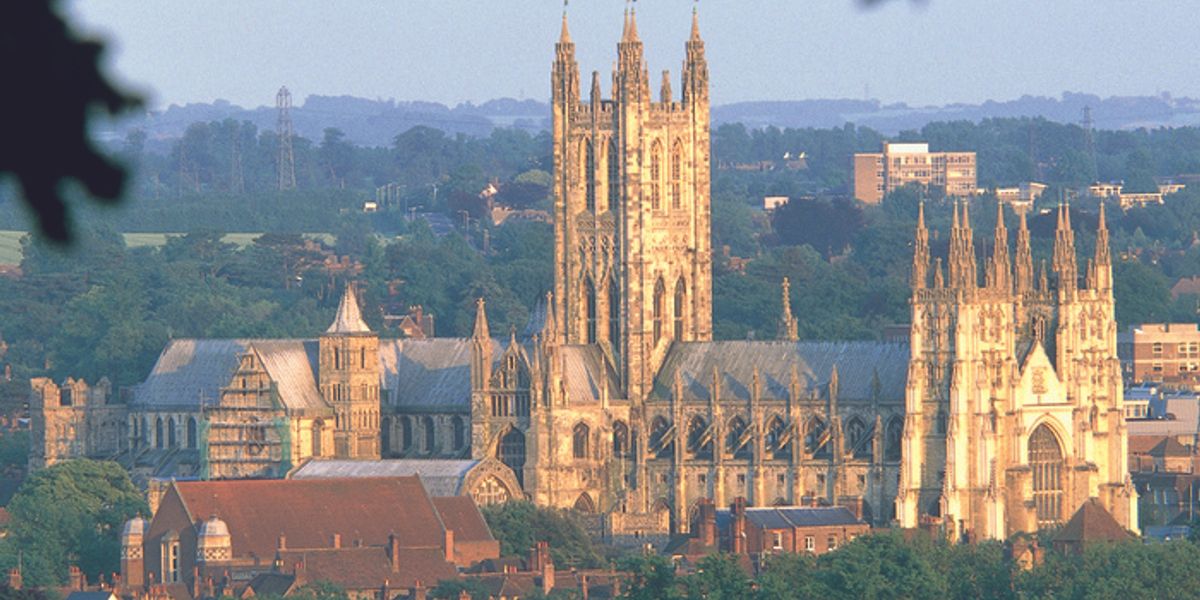
Canterbury Cathedral

Lambeth Conference, 2022

Leslie and I are on our way England to participate in the Lambeth Conference in Canterbury. The Lambeth Conference is a gathering of the bishops of the Anglican Communion which is made up of 41 provinces around the world of which the Episcopal Church is one. It has been held approximately every 10 years since the first one in 1867. Due to a covid delay and other things it has been 14 years since the last one.

I am excited to be a part of this. The connectedness, the sense of belonging to something bigger – the catholicity – of the Anglican Communion is one of the things that drew me to the Episcopal Church. The Anglican Communion is a reminder that to be a Christian is not an individual affair. It is to be a member of the body of Christ, the church. It is to be bound to allegiances that transcend national boundaries as well as other loyalties. Episcopalians in Wisconsin are fundamentally united to members of the Anglican Communion around the globe by a common heritage of faith, by bonds of affection and by the water of baptism which is thicker than blood. We belong to one another. The gathering of bishops at the Lambeth Conference is a sign of that belonging.

What we will be up to

We will be stayin g at Kent University in Canterbury. There will be a retreat for the first couple of days. The Conference itself will include worship at Canterbury Cathedral, prayer, small group Bible Study (Leslie and I have each been asked to be facilitators of our respective groups), connecting through informal and formal conversations and listening, discussing issues that face the church and the world. The focus will be on exploring what it means to be ‘God’s Church for God’s World’ in the decade ahead. Bishops will discuss several themes that are to result in a set of “Lambeth Calls”. Those themes are:

  Mission and Evangelism

  Reconciliation

  Safe Church

  Environment and Sustainable Development

  Christian Unity

  Inter-faith Relations

  Anglican Identity

  Human Dignity

  Discipleship

Consternation

We received the drafts of these calls last week. I expect nearly all of them will receive near unanimous affirmation. Controversially, the draft Lambeth Call on Human Dignity includes the suggestion that we vote on affirming Lambeth 1:10 – a resolution from Lambeth 1998 that says Christian marriage is only between a man and a woman. This is a surprise to many of us. We certainly expected to have conversations about a wide range of issues and it is not surprising that this might be a topic of discussion. But voting on it strikes many of us as problematic.

It should be no surprise that many bishops will want to affirm the historic understanding of marriage and this might well be a majority. On the one hand, this would not be news. We know that the position the Episcopal Church and others have come to that that historic understanding can be faithfully expanded to include same-gender marriages is still a “minority report” within the Anglican Communion.

But such a declaration of a majority will do nothing to lessen the threat to the lives and flourishing of LGBTQ people who are members of every province of the Communion. It may well exacerbate it. Therefore, many bishops have expressed concern and are committed to finding a different way. I am committed to finding a different way.

I expect that if there is a “vote” it will reveal that the majority of bishops believe what is generally referred to as the traditional view. But I also expect it will reveal that that majority is not overwhelming, and we are far from one mind. A vote will not change the reality in the Episcopal Church and other provinces like Brazil, Mexico, New Zealand, Australia, Canada, Korea, Scotland, Wales that have come to similar conclusions. It will not change the trajectory of other provinces, including the Church of England. In fact, there is a diversity of views on this in every province. I hope that before there is a vote, the language is amended to better represent that diversity of conviction and practice in our Communion.

What does this mean for us?

The Anglican Communion is not like the Roman Catholic Church. The Archbishop of Canterbury is not the Anglican pope. The office is more like Patriarch of Constantinople in the Eastern Orthodox Churches– respected and taken seriously but with no direct authority beyond the Province of the Church of England. Similarly, the Lambeth Conference was never meant to be an authoritative body.

What the bishops affirm together is not insignificant, and we will want to take each affirmation seriously. But nothing the bishops say there will be binding on every province. The dioceses of Wisconsin, including Fond du Lac and Eau Claire have made it clear that LGBTQ people are welcome in our congregations, most of which have declared themselves prepared to celebrate same-sex marriages. It will also not change the fact that we will continue to recognize that many of our members disagree with that position. They, too, are welcome. Nor will it change the fact that we will continue to strive to engage one another with honesty, charity, generosity, and holy curiosity.

That posture of honesty, charity, generosity, and holy curiosity is what Leslie and I will be adopting and practicing while we are at the Lambeth Conference. Perhaps it is fitting that the bishops and spouses will be studying 1 Peter together which includes one of my favorite lines from the Bible, “Always be ready to make your defense to anyone who demands from you an account of the hope that is in you; yet do it with gentleness and reverence” (1 Peter 3:15-16).

Communion is hard

To be a Christian is to be called together as members of one another in the body of Christ. The body that is the Anglican Communion is made of a wide variety of people from almost every continent with different theological convictions and a profound diversity of cultural and political contexts. That can make belonging to one another challenging. But it is also beautiful. And it points to God's desire that human diversity will be lived as a rich, harmoniuos solidarity. Leslie and I look forward to experiencing a slice of it at the Lambeth Conference.