Friday, August 28, 2015

How I Came to Change My Mind on SSU: Part 6. Back to the Bible


Last May I began a series of blog posts “How I Came to Change My Mind on Same Sex Unions.” For a variety of reasons, I set that series aside for much of the summer. I am now resuming that series.

To recap, I began expressing some of the obstacles to my change of mind.

I then explained that it was the testimony of brother and sister Christians who are gay and lesbian that prepared me to rethink things. I wrote about the negative testimony by gay and lesbian Christians of the toll the traditional understanding has often had on them and about the positive testimony of the faithful lives of gay and lesbian Christians.

I also jumped ahead, given the approach of the General Convention of the Episcopal Church, and expressed my view that same sex unions might not be exactly the same thing as marriage between a man and a woman.

And I wrote some thoughts on interpreting scripture in which I proposed what I think is a biblical way of reading the Bible which makes the love and mercy embodied and taught by Jesus the measure of interpretation. Thus it is faithful to seek an interpretation of scripture that is the most merciful and that leads us deeper into love. And I showed that this is not a new idea, but has precedent elsewhere among important Christian theologians.

That is where I stopped. I still haven’t looked at the particular passages of the Bible that commonly come into play when Christians engage questions raised by the reality homosexuality. In coming posts, i will be reviewing that much traveled territory. I don't know that I have much that is new to add, but I will offer interpretations that I find persuasive. But, before I do that, I want to say a bit more about my approach to the Bible.

Getting Biblical

In a recent post not linked to this series, I referred to a study guide on understanding and interpreting the Bible: The King or a Fox: Configuring the Mosaic of Scripture. In that study guide I point out that there is no one official, God-given way of understanding of what it means for the Bible to be inspired or how to interpret it. And I acknowledge that faithful Christians have come to different conclusions interpreting the Bible on significant issues (I offered more examples of this in the introduction to another study guide, In Dialogue With Each Other). I then offered some criteria for discerning more faithful from less faithful interpretations of scripture.

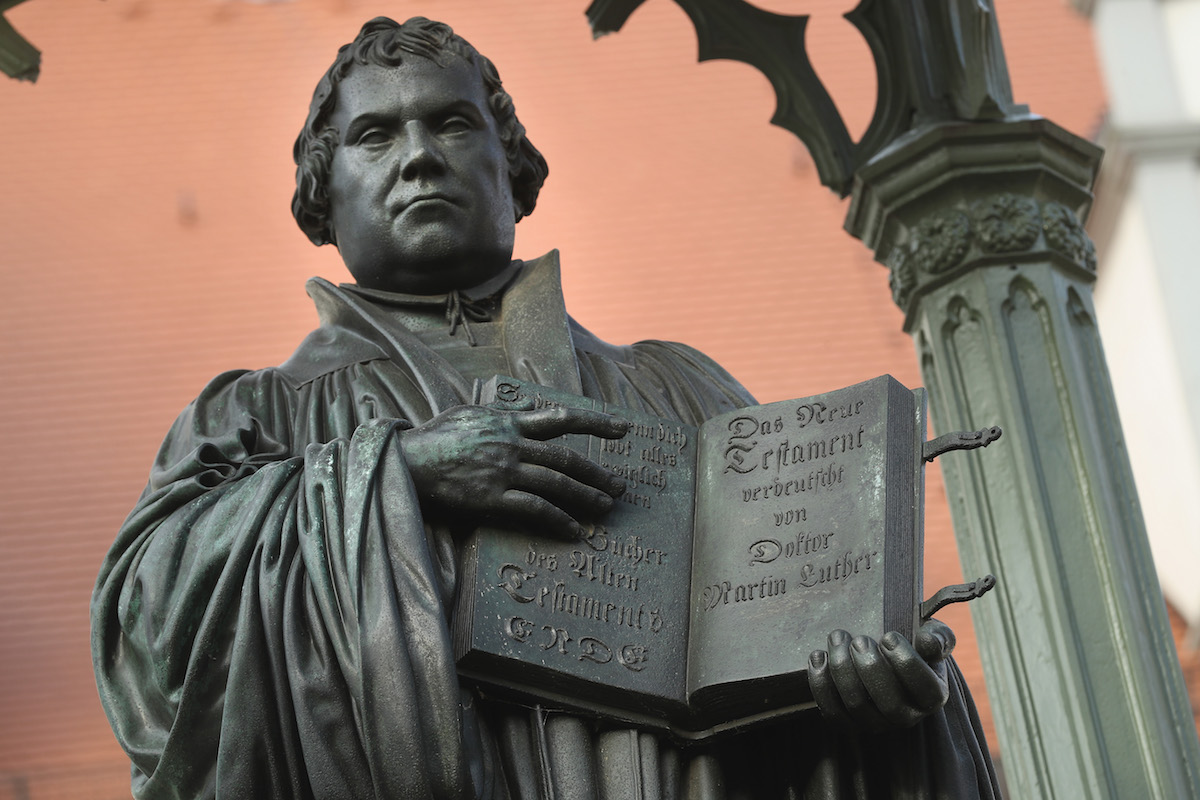
Illustrating the reality that faithful Christians have embraced very different approaches to the Bible, I recently posted a few quotes from Martin Luther whose approach to the Bible was very different from that of many contemporary American Christians. It is also a fact that the approaches to the Bible embraced by most American Christians, including conservative Christians, are actually quite recent inventions.

I am reviewing these, because I want to acknowledge that I am advocating a particular approach to the Bible. It is not the only approach. But, as I said, I think is a biblical way of reading the Bible which makes the love and mercy embodied and taught by Jesus the measure of interpretation. Thus it is faithful to seek an interpretation scripture the most merciful and that leads us deeper into love. This is not a new idea or a "liberal" idea, but has precedent elsewhere among important Christian theologians from the early church through the Reformation.

I am advocating a Christ-centered approach to the Bible because I believe

Long ago God spoke to our ancestors in many and various ways by the prophets, but in these last days he has spoken to us by a Son, whom he appointed heir of all things, through whom he also created the worlds. He is the reflection of God’s glory and the exact imprint of God’s very being, and he sustains all things by his powerful word. When he had made purification for sins, he sat down at the right hand of the Majesty on high, having become as much superior to angels as the name he has inherited is more excellent than theirs. (Hebrews 1:1-4)

There is much we do not understand about the Bible or life in general,

but we do see Jesus, who for a little while was made lower than the angels, now crowned with glory and honor because of the suffering of death, so that by the grace of God he might taste death for everyone. (Hebrews 2:9)

It is Jesus who is the Word of God (John 1:1-18). The Bible is the word of God inasmuch as it points us to and reveals Jesus. It points to the way, the truth, and the life that Jesus is. So, in the next post I will begin with Jesus.


Part 1. Obstacles


Monday, August 17, 2015

The King or a Fox: Configuring the Mosaic of Scripture


Last spring, on the website of the Diocese of Fond du Lac, I offered a study guide to understanding and interpreting Scripture – The King or a Fox: Configuring the Mosaic of Scripture. I used an image proposed by the great 2nd century theologian, Irenaeus of Lyon who argued that reading scripture is like configuring a mosaic of precious jewels. That mosaic can be configured in more ways than one.The trick is discerning faithful from unfaithful configurations while recognizing the fact that faithful interpreters of the Bible do not always come at it the same way or come to the same conclusions.

In that study, I briefly explore ways of understanding what it means for the Bible to be inspired and suggested a way of thinking about the purpose of scripture.

The main purpose of scripture is to show us who Jesus is, who God is in light of Jesus, and who we are and who we can be when we are properly aligned with God in Christ through the Holy Spirit. It is about shaping our lives and imaginations. It places demands upon us, but it also opens up visions and possibilities for ourselves and our world that we could scarcely imagine otherwise.

I then proposed ten criteria for faithful interpretation/configuaration of the Bible. Here are those criteria with condensed explanations:

There is a basic outline that informs any faithful configuration of scripture. That is the story of God’s creating the world and declaring it good, the recognition that that goodness has been despoiled rather than lived into, God’s call of Abraham and his descendants to be a blessing to the nations, the deliverance of God’s people in their exodus from evil, the establishing of the royal line of David, their return from exile, the growing expectation of God’s restoration of all things, Jesus Christ as the embodiment and fulfillment of that expectation, and the Church as the community called to bear witness to and live into that expectation.

Beyond that basic outline, what might be some criteria to help us configure scripture such that we are more likely to end up with a portrait of the King rather than a fox while recognizing the complex ways in which we all make interpretive choices and give some portions of scripture priority over others? How do we recognize the King in a configuration of scripture while still accounting for the reality that we do not always end in the same place and not all faithful portraits will look exactly the same? Can we identify some criteria or criteria by which we evaluate more faithful biblical configurations from less faithful or even faithless interpretations? Not all configurations are faithful. Not all faithful configurations are equally faithful. But there might be a range of recognizably, more or less, faithful configurations. The following criteria, based on how the canon of scripture came to be accepted and how the early church read the Bible, are suggested to assist in configuring the mosaic of scripture o we see a faithful portrait of the King.

1. The Criterion of Jesus Christ

While any faithful interpretation must take into account the whole witness of scripture, Old Testament and New Testament, Jesus Christ is the center and measure of all things including the rest of Scripture (Hebrews 1:1-2).

2. The Criterion of Love

Interpretations of scripture that cultivate mercy and charity are preferred.
Jesus asserts this in Matthew 22:40, “On these two commandments [love of God and neighbor] hang all the law and the prophets [all of scripture]. It is also implied in Jesus’ teaching in Mark 2:27, “The Sabbath [symbolic of the law] was made for humans, not humans for the Sabbath.”

3. The Criterion of the Rule of Faith

One of the important criteria the early Church used in discerning which writings to recognize as canonical was whether they conformed to the Rule of Faith – the teaching passed down from the Apostles. That Rule of Faith finds its expression for us in the Creeds.

4. The Criterion of the Church’s Prayer

The rule of prayer is the rule of belief (Lex orandi, lex credendi). We believe what we pray. As with the Rule of Faith, there is a symbiotic relationship between the Church’s worship and its reading of scripture.

5. The Criterion of the Church's Tradition

We always read the Bible with the saints. The wisdom of the Communion of the Saints is a gift that shapes our ongoing configuration of scripture. For Anglicans, this has classically meant especially the catholic consensus that developed in the first five centuries.

6. The Criterion of Comprehensiveness

The scriptures contain multiple concerns, themes and images, many of which are in apparent tension with others. They are not given to neat systematization. Any comprehensive approach to the Bible ends up with some anomalies.

The fewer passages of scripture that are anomalous to a configuration the better. Even then, the remainder remains and must be acknowledged and reckoned with.

7. The Criterion of Dissimilarity

While it is incumbent upon Christians of every time and place to interpret scripture afresh in light of their context, any faithful reading of scripture must be dissimilar enough from the surrounding culture and the interpreter's social/intellectual milieu to maintain the edge of repentance and conversion.

8. The Criterion of the Book of Nature/Creation

Theologians of the early and Medieval Church frequently refer to creation as God’s other “book” of revelation. A faithful configuration of scripture will take into account what we know of creation as it is.

9. The Criterion of Community

The God revealed in the scriptures calls people into community and it is to the community that they are addressed with the intention of forming and sustaining a people of witness. Scripture is about the Church. It has its fullest meaning in the context of the Church and its worship. It describes the God who has called us and made us a people who were not a people and describes what kind of people we are to be in response.

10. The Criterion of Character

The scriptures are about the formation of holy communities and holy persons as members of such communities. There is a symbiotic relationship between the scriptures forming holiness and the necessity of a degree of holy living in order to understand the scriptures.

Conclusion

No one criterion is adequate and no set of criteria will assure agreement on particular questions of interpretation. And some of the above criteria will sometimes seem to be in tension with one another. They are not a formula to insure that we all find one supposed true interpretation – we will always be living under the mercy of God. But, an interplay of the above criteria would provide a broad measure of relative faithfulness as we seek together to configure an image of the King rather than a fox and to allow our lives to be shaped in his image.

Thursday, August 13, 2015

Martin Luther on the New Testament

The last two posts have been excerpts from Martin Luther’s introduction to the Old Testament. In one of those excerpts, the great reformer asserts that the Old Testament is analogous to the manger and swaddling-clothes in which Jesus is laid, suggesting that not that is contained in the Old Testament is to be equated with Jesus Christ. In the other he insists that “all laws aim at faithand love, none of them can be valid, or be a law, if it conflicts with faith and love.”

Here are the last few paragraphs of Luther’s Preface to his German translation of the New Testament (1522):

Which are the true and noblest books of the New Testament?

From all this you can now judge all the books and decide among them which are the best.  John’s gospel and St. Paul’s epistles, especially that to the Romans, and St. Peter’s first epistle are the true kernel and marrow of all the books. They ought properly to be the foremost books, and it would be advisable for every Christian to read them first and most, and by daily reading to make them as much his own as his daily bread. For in them you do not find many works and miracles of Christ described, but you do find depicted in masterly fashion how faith in Christ overcomes sin, death, and hell, and gives life, righteousness, and salvation. This is the real nature of the gospel, as you have heard.

If I had to do without one of the other – either the works or the preaching of Christ – I would rather do without the works than without His preaching. For the works do not help me, but His words give life, as He Himself says [John 6:63] . Now John writes very little about the works of Christ, but very much about His preaching, while the other evangelists write much about His works and little about His preaching. Therefore John’s Gospel is the one, fine, true, and chief gospel, and is far, far to be preferred over the other three and placed high above them. So, too, the epistles of St. Paul and St. Peter far surpass the other three Gospels, Matthew, Mark, and Luke.

In a word St. John’s Gospel and his first epistle, St. Paul’s epistles, especially Romans, Galatians, and Ephesians, and St. Peter’s first epistle are the books that show you Christ and teach you all that is necessary and salvatory for you to know, even if you were never to see or hear any other book or doctrine. Therefore St. James’ epistle is really an epistle of straw, compared to these others, for it has nothing of the nature of the gospel about it.
(The Protestant Reformation, Hans J. Hillerbrand, ed., New York, Harper Torchbooks, 1968, p. 42)

I am sympathetic to Luther’s approach to scripture. It is quite different from the approach I was taught growing up, i.e., that all of the Bible (except, of course, the Apocrypha), every word and verse, is equal in inspiration and authority.  But, my experience is that one way or another all readers of scripture give priority to some scriptural texts or themes by which the rest are measured. Luther was just more up front about it.

While I am sympathetic, I am less reductionist than Luther – at least as he is in the passage above. I would insist for example that the Gospel of John must not be read apart from the other three gospels. And I think the Epistle of James has much to teach us not least because the faith vs works dichotomy as Luther presents it is too simplistic and does not adequately reflect what Jesus taught or, for that matter, what Paul taught.

In any event, Luther’s introductions to the Old and New Testaments present an approach to the Bible quite different from what is common among many contemporary American Christians. Luther could be wrong. From the beginning of the Reformation (and before, actually) there has been more than one way to come at the Bible and understand its inspiration, authority and interpretation. No way of engaging the Bible dropped from the sky. And whether you were taught or consciously adopted a way of reading the Bible inherited from Martin Luther, John Calvin, Menno Simons, Thomas Aquinas, John Darby or someone else, it is not the only or obvious or authoritative approach. You either chose it or it was chosen for you by those who taught you. 

I have suggested an approach that I think is a faithful way of engaging the Bible here: The King or a Fox? Configuring the Mosaic of Scripture. And similar to Luther’s emphasis on faith and love, I have argued that a biblical way of reading the Bible will use love and mercy as Jesus taught and embodied them as the measure by which to interpret the Bible.

Previous:


Wednesday, August 12, 2015

Faith and Love are Always to be Mistresses of the Law

Following up on the last post, here is more from Martin Luther's introduction to the Old Testament:

[I]t is to be noted that the laws are of three kinds. Some speak only of temporal things, as do our imperial laws. These are established by God chiefly because of the wicked, that they may not do worse things. Such laws are for prevention rather than for instruction; as when Moses commands to dismiss a wife with a letter of separation, or that a husband shall bring an “offering of jealousy” for his wife, and may take other wives besides.

All these are temporal laws. — There are some, however, that teach the external worship of God, as was said above.

Over and above these are the laws about faith and love, so that all other laws must and ought to be measured by the laws of faith and love; that is to say, they are to be kept where their observance does not conflict with faith and love; but where they conflict with faith and love, they are entirely void.

Therefore we read that David did not kill the murderer Joab, though he had twice deserved death; and in 2 Samuel 14:11 he promises the woman of Tekoa that her son shall not die, though he has slain his brother; Absalom, too, he did not kill. Moreover, David himself ate of the holy bread of the priests, and Tamar thought the king might give her in marriage to her stepbrother, Amnon. From these and similar stories one sees plainly that the kings, priests, and heads of the people often transgressed the laws boldly, at the demand of faith and love, and therefore that faith and love are always to be mistresses of the law and to have all laws in their power. For since all laws aim at faith and love, none of them can be valid, or be a law, if it conflicts with faith and love.

Tuesday, August 11, 2015

Martin Luther & Scripture as the Swaddling-clothes and the Manger in which Christ lies

Let’s be honest. The Old Testament – along with much that is beautiful, wonderful, evocative, and edifying – contains material that is puzzling, disturbing, and even morally offensive when measured against the life and teaching of Jesus. One of the big questions of biblical interpretation is how to make sense of that.

One way to at least begin answering that question is Martin Luther’s double analogy in his introduction to the Old Testament. First he suggests that the Old Testament is like a rich and inexhaustible mine in which we find the wisdom of God. Then he compares it to the manger and swaddling clothes in which Jesus lies. Not everything in the Old Testament is the treasure. Some of it is more swaddling clothes and manger. But it is the loftiest and noblest of holy things because of the treasure it holds:

Therefore let your own thoughts and feelings go, and think of the Scriptures as the loftiest and noblest of holy things, as the richest of mines, which can never be worked out, so that you may find the wisdom of God that He lays before you in such foolish and simple guise, in order that He may quench all pride. Here you will find the swaddling-clothes and the manger in which Christ lies, and to which the angel points the shepherds.

Simple and little are the swaddling-clothes, but dear is the treasure, Christ, that lies in them.

More on Luther and scripture:


Saturday, August 8, 2015

What Jesus Commanded, Part 11: Stay Awake & Endure, Judgement Day

Some do not like the idea of God's final judgement, assuming that God's love must be too nice to hold people ultimately accountable for their choices. Jesus apparently did not share that view. He seems to have taken seriously his insistence that people follow him and obey his teaching. 

But, the kinds of things Jesus mentions as the the basis for that judgment are instructive and perhaps not surprising given the commandments listed in the previous posts of this series. When Jesus said, “Repent, for the kingdom of heaven has come near" (Matthew 4:17), these must have been the kinds of things he had most in mind as what we need to turn away from or toward in order to follow him.

Stay Alert and Endure

“Keep awake therefore, for you know neither the day nor the hour.” Matthew 25:13

“Stay awake and pray that you may not come into the time of trial; the spirit indeed is willing, but the flesh is weak.” Matthew 26:41

“Beware of false prophets, who come to you in sheep’s clothing but inwardly are ravenous wolves. You will know them by their fruits.” Matthew 7:15-16

“Then if anyone says to you, ‘Look! Here is the Messiah!’ or ‘There he is!’—do not believe it.” Matthew 24:23

“You also must be ready, for the Son of Man is coming at an unexpected hour.” Luke 12:40

“By your endurance you will gain your souls.” Luke 21:19

“Keep awake therefore, for you do not know on what day your Lord is coming.” Matthew 24:42

“Everyone will hate you because of me, but the one who stands firm to the end will be saved.” Mark 13:13

Judgement Day

“Do not be astonished at this; for the hour is coming when all who are in their graves will hear his voice and will come out—those who have done good, to the resurrection of life, and those who have done evil, to the resurrection of condemnation.” John 5:28-29

“Do not fear those who kill the body but cannot kill the soul; rather fear him who can destroy both soul and body in hell.” Matthew 10:28 (cf. Luke 12:5)

“Should you not have had mercy on your fellow-slave, as I had mercy on you?” And in anger his lord handed him over to be tortured until he should pay his entire debt. So my heavenly Father will also do to every one of you, if you do not forgive your brother or sister from your heart.” Matthew 18:33-35

“But I say to you that if you are angry with a brother or sister, you will be liable to judgement; and if you insult a brother or sister, you will be liable to the council; and if you say, 'You fool', you will be liable to the hell of fire." Matthew 5:22

“I tell you, on the day of judgement you will have to give an account for every careless word you utter; for by your words you will be justified, and by your words you will be condemned.” Matthew 12:36-37

“If your hand causes you to stumble, cut it off; it is better for you to enter life maimed than to have two hands and to go to hell, to the unquenchable fire. And if your foot causes you to stumble, cut it off; it is better for you to enter life lame than to have two feet and to be thrown into hell., And if your eye causes you to stumble, tear it out; it is better for you to enter the kingdom of God with one eye than to have two eyes and to be thrown into hell, where their worm never dies, and the fire is never quenched.” Mark 9:43-48 (cf. Matthew 5:29-30, Matthew 18:8-9)

“Those who are ashamed of me and of my words in this adulterous and sinful generation, of them the Son of Man will also be ashamed when he comes in the glory of his Father with the holy angels.” Mark 8:38 (cf. Luke 9:26)

“And I tell you, everyone who acknowledges me before others, the Son of Man also will acknowledge before the angels of God; but whoever denies me before others will be denied before the angels of God.” Luke 12:8-9

“Truly I tell you, people will be forgiven for their sins and whatever blasphemies they utter; but whoever blasphemes against the Holy Spirit can never have forgiveness, but is guilty of an eternal sin”— for they had said, “He has an unclean spirit.” Mark 3:28-30 (cf. Matthew 12:31-32, Luke 12:10)

“Very truly, I tell you, no one can enter the kingdom of God without being born of water and Spirit.” John 3: 5

“The one who believes and is baptized will be saved; but the one who does not believe will be condemned.” Mark 16:16

“Indeed, God did not send the Son into the world to condemn the world, but in order that the world might be saved through him. Those who believe in him are not condemned; but those who do not believe are condemned already, because they have not believed in the name of the only Son of God.” John 3:17-18

“Whoever welcomes you welcomes me, and whoever welcomes me welcomes the one who sent me. Whoever welcomes a prophet in the name of a prophet will receive a prophet’s reward; and whoever welcomes a righteous person in the name of a righteous person will receive the reward of the righteous; and whoever gives even a cup of cold water to one of these little ones in the name of a disciple—truly I tell you, none of these will lose their reward.” 
Matthew 10:40-42

“If any of you put a stumbling-block before one of these little ones who believe in me, it would be better for you if a great millstone were fastened around your neck and you were drowned in the depth of the sea. Woe to the world because of stumbling-blocks!” Matthew 18:6-7 (cf. Mark 9:42 Luke 17:2)

“Whoever is not against us is for us. For truly I tell you, whoever gives you a cup of water to drink because you bear the name of Christ will by no means lose the reward.” Mark 9:40-41

“Then the king will say to those at his right hand, ‘Come, you that are blessed by my Father, inherit the kingdom prepared for you from the foundation of the world; for I was hungry and you gave me food, I was thirsty and you gave me something to drink, I was a stranger and you welcomed me, I was naked and you gave me clothing, I was sick and you took care of me, I was in prison and you visited me.’ Then the righteous will answer him, ‘Lord, when was it that we saw you hungry and gave you food, or thirsty and gave you something to drink? And when was it that we saw you a stranger and welcomed you, or naked and gave you clothing? And when was it that we saw you sick or in prison and visited you?’ And the king will answer them, ‘Truly I tell you, just as you did it to one of the least of these who are members of my family, you did it to me.’ Then he will say to those at his left hand, ‘You that are accursed, depart from me into the eternal fire prepared for the devil and his angels; for I was hungry and you gave me no food, I was thirsty and you gave me nothing to drink, I was a stranger and you did not welcome me, naked and you did not give me clothing, sick and in prison and you did not visit me.’ Then they also will answer, ‘Lord, when was it that we saw you hungry or thirsty or a stranger or naked or sick or in prison, and did not take care of you?’ Then he will answer them, ‘Truly I tell you, just as you did not do it to one of the least of these, you did not do it to me.’ And these will go away into eternal punishment, but the righteous into eternal life.” Matthew 25:34-46

Friday, August 7, 2015

What Jesus Commanded, Part 10: From the Human Heart, etc.

What comes from the Heart & Mouth

“Do you not see that whatever goes into a person from outside cannot defile, since it enters, not the heart but the stomach, and goes out into the sewer?’ (Thus he declared all foods clean.) And he said, ‘It is what comes out of a person that defiles. For it is from within, from the human heart, that evil intentions come: fornication, theft, murder, adultery, avarice, wickedness, deceit, licentiousness, envy, slander, pride, folly. All these evil things come from within, and they defile a person.’ Mark 7:18-23 (cf. Matthew 15:18-20)

Uncatagorized

“Blessed are those who mourn, for they will be comforted.” Matthew 5:4

“Blessed are those who hunger and thirst for righteousness, for they will be filled.” Matthew 5:6

“Blessed are those who are persecuted for righteousness’ sake, for theirs is the kingdom of heaven.” Matthew 5:10

“Blessed are you when people revile you and persecute you and utter all kinds of evil against you falsely on my account. Rejoice and be glad, for your reward is great in heaven, for in the same way they persecuted the prophets who were before you.” Matthew 5:11-12

“Blessed are you who weep now,
for you will laugh.
Blessed are you when people hate you, and when they exclude you, revile you, and defame you on account of the Son of Man. Rejoice on that day and leap for joy, for surely your reward is great in heaven; for that is what their ancestors did to the prophets.
Woe to you who are laughing now,
for you will mourn and weep.
Woe to you when all speak well of you,
for that is what their ancestors did to the false prophets.”
Luke 6:21-26

“Truly, I tell you, whoever receives one whom I send receives me; and whoever receives me receives him who sent me.” John13:20

“Do not swear at all, either by heaven, for it is the throne of God, or by the earth, for it is his footstool, or by Jerusalem, for it is the city of the great King. And do not swear by your head, for you cannot make one hair white or black. Let your word be ‘Yes, Yes’ or ‘No, No.’” Matthew 5:34-37

“Do not give what is holy to dogs; and do not throw your pearls before swine.” Matthew 7:6 ‘

“And call no one your father on earth, for you have one Father—the one in heaven. Nor are you to be called instructors, for you have one instructor, the Messiah” Matthew 23:9-19

“And he said to them, ‘Pay attention to what you hear; the measure you give will be the measure you get, and still more will be given you. For to those who have, more will be given; and from those who have nothing, even what they have will be taken away.” Mark 4:24-25

“So you also on the outside look righteous to others, but inside you are full of hypocrisy and lawlessness.” Matthew 23:28


“You will be hated by all because of my name. But the one who endures to the end will be saved.”